
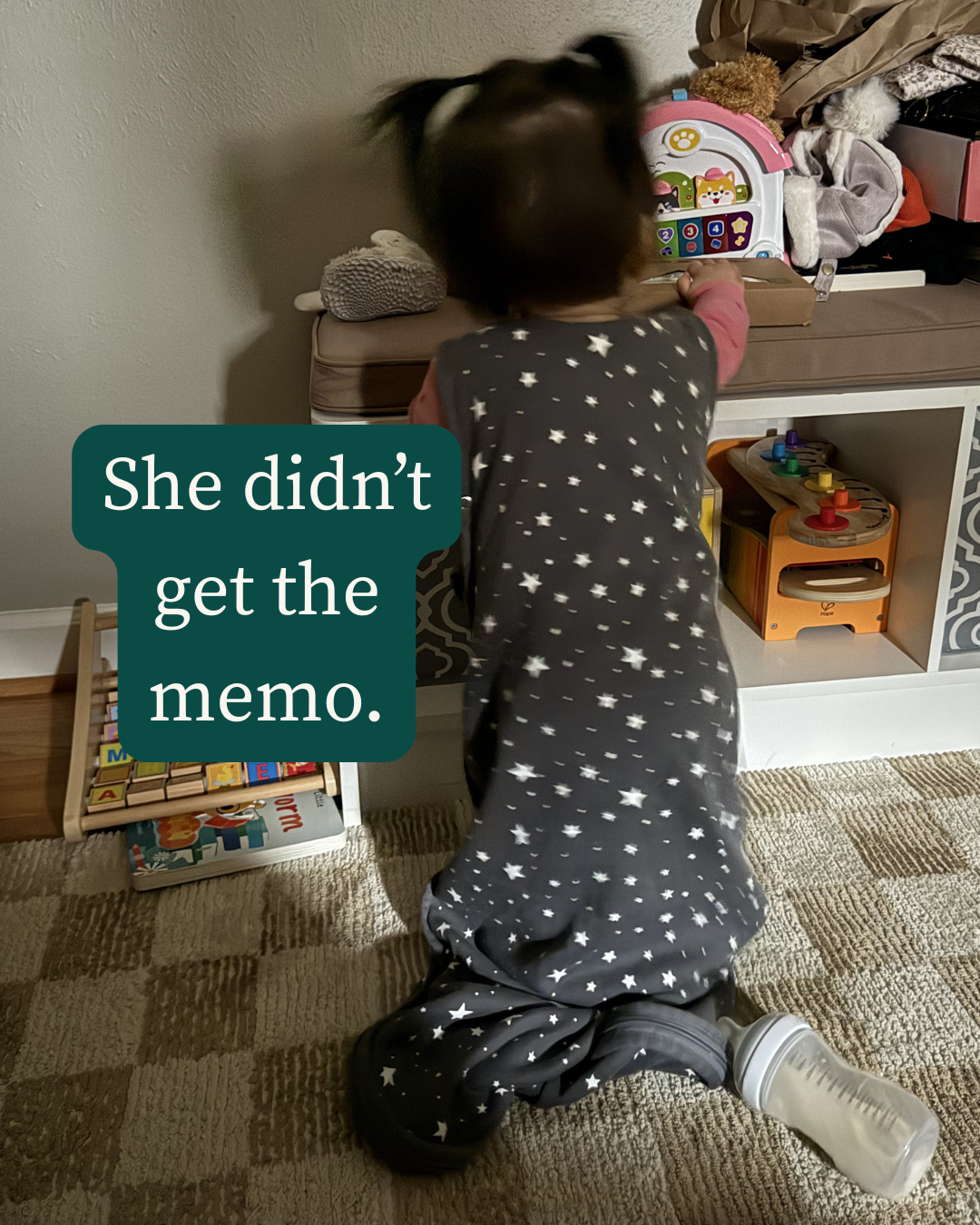
If Your Baby Didn’t Read the Schedule… You’re Not Alone
If you’ve ever thought:
“Why does nap time keep moving?”
“We had a routine… and then everything changed”
“Is it bad that today looks nothing like yesterday?”
Welcome. You’re in the right place.
For babies 4–12 months, routines matter—but not in the way Instagram charts might suggest.
At this age, rhythm > rigidity.
And spring is the perfect time to reset.
Why Routines Matter (But Not the Strict Kind)
Between 4–12 months, babies are:
More alert
More mobile
More aware of patterns
More sensitive to transitions
They’re learning what comes next—not what time it is.
Flexible routines help babies feel:
Emotionally safe
Regulated
Confident exploring the world
And they help parents feel less like they’re constantly “behind.”
Think Rhythm, Not Schedule
A flexible routine is built on predictable patterns, not exact times.
Instead of:
“Nap is at 10:00 AM sharp.”
Think:
“We play → we slow down → we rest.”
Examples of rhythm-based anchors:
A calm morning start (connection before tasks)
Floor play after feeds
A short walk or babywearing break mid-morning
A consistent nap wind-down—even if the nap length varies
Babies learn through repetition, not precision.
Daily Flow: Structure and Freedom
Your baby doesn’t need constant entertainment or programming.
They benefit from:
Short moments of focused play (blocks, books, music)
Lots of free movement and exploration
Familiar sequences throughout the day
The magic is in the order, not the duration.
This kind of structure supports:
Engagement
Regulation
Early learning
Easier transitions
Naps, Transitions & Real Life
Between 6–12 months, naps are still essential—but often inconsistent.
Here’s what helps:
Keeping nap routines familiar, even when timing shifts
Using cues: songs, movement, verbal transitions
Expecting flexibility during teething, growth spurts, and new skills
A routine can stay intact even when sleep doesn’t.
Flexibility Is Not Failure
Let’s say this clearly:
Adjusting your routine does not mean you’re doing it wrong.
Babies change quickly.
Needs shift.
Bodies grow.
Skills explode.
Flexible routines teach babies something powerful:
“The world is predictable and responsive.”
That’s the foundation of regulation and trust.
Spring Reset Reminder 🌱
Spring is about opening things up:
More daylight
More movement
More outdoor time
Less over-controlling the day
A flexible routine makes it easier to:
Leave the house
Meet other parents
Say yes to fresh air
Roll with real life
And you don’t have to figure this out alone.
At The Heybrook, our Parent Foundations classes support parents through this exact stage—helping you build rhythms that work for your baby, your family, and your season.
Because routines should support your life—not run it.