
Parallel Play, Sharing, and What Peer Interaction Really Looks Like at Every Age
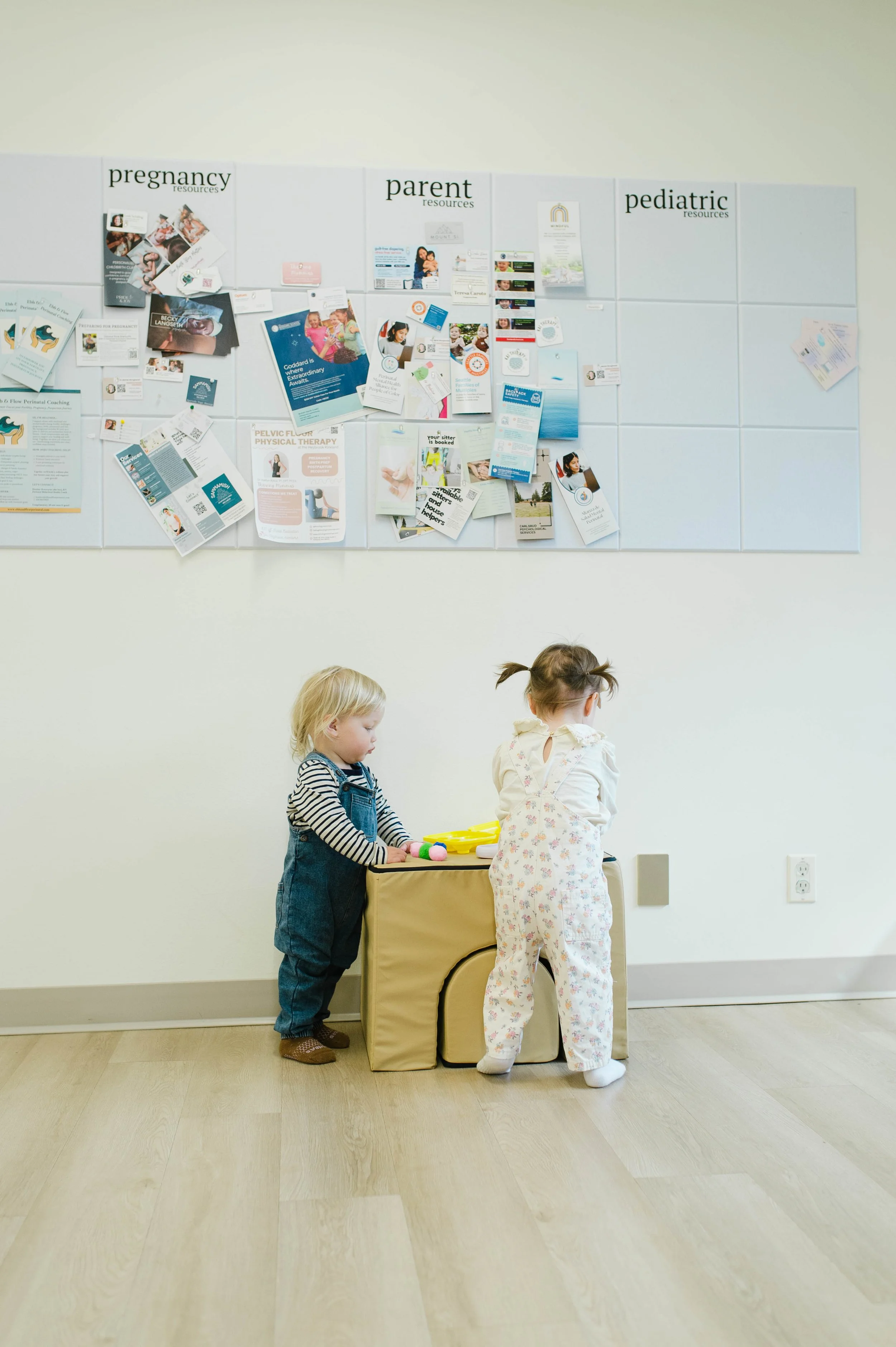
If you have ever watched two toddlers play side by side for twenty minutes without really interacting and wondered if something was wrong, the answer is no. What you were watching was exactly correct for where those toddlers are developmentally.
Parallel play, playing beside rather than with, is the developmentally appropriate peer interaction format for most toddlers. The expectation that toddlers should play together the way older children do is one of the most common sources of parental worry that turns out to be entirely unfounded.
0-7 Months: Social Interest Before Social Ability
Social interest in peers emerges between three and six months, much earlier than most parents expect. When babies stare at each other, they are doing genuine social cognitive work: processing another person as distinct from an object. Parent narration scaffolds this noticing into language and meaning.
7-12 Months: Imitation Is the Point
When a crawler grabs another baby's toy, they are not being antisocial. They have observed what the other baby found interesting and want to explore it too. This is imitative learning, one of the primary mechanisms of human development. Redirect calmly. Don't shame. The curiosity driving the behavior is worth protecting.
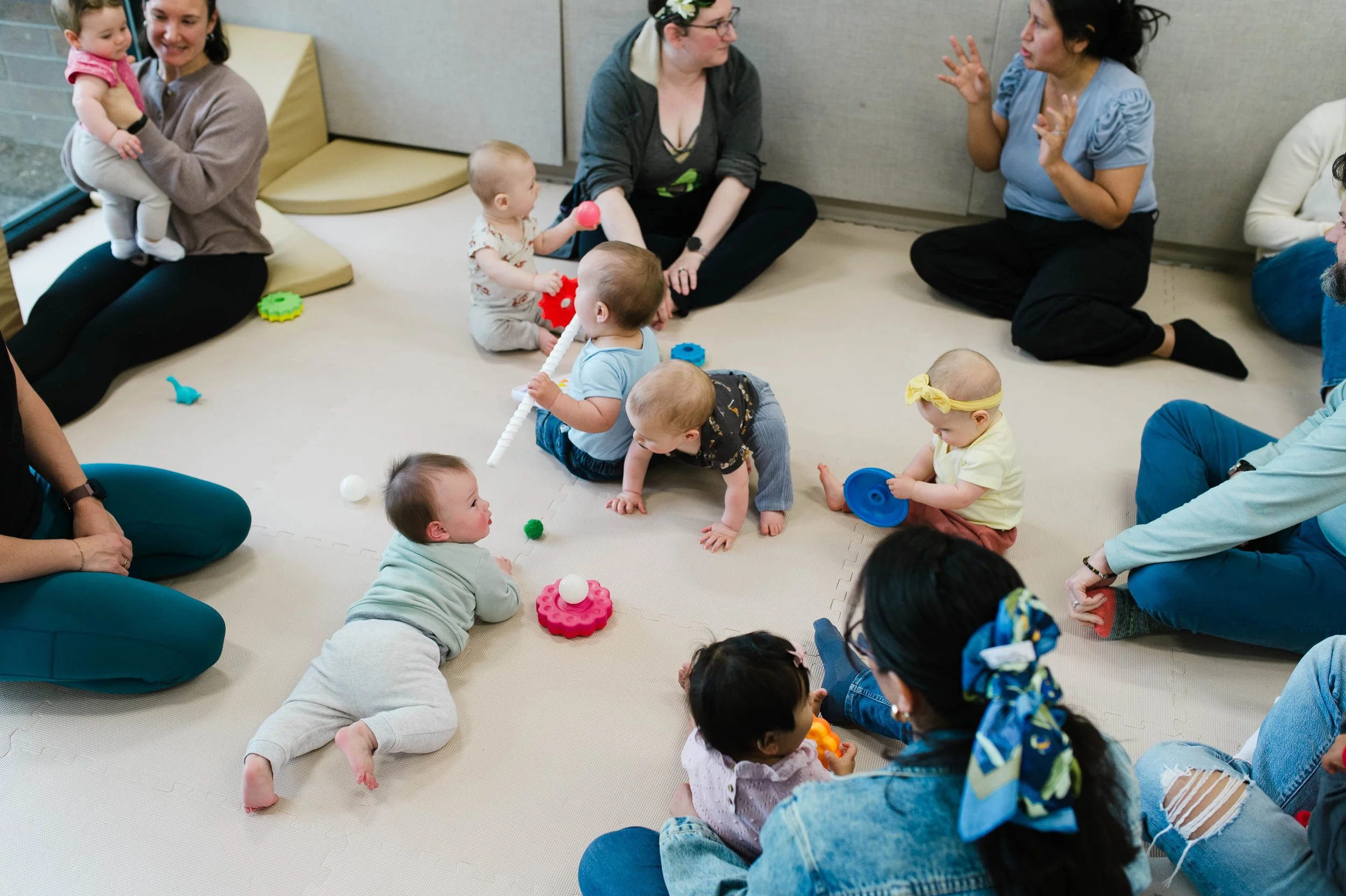
Parallel sensory play at this age produces imitative learning constantly. One baby does something, the other watches, then tries. That is social-cognitive development at its most efficient.
12-24 Months: Parallel Play Is Social Play
Toddlers are not ready for sharing because they don't yet have reliable access to abstract thinking. The concept that something given away temporarily will come back requires abstract reasoning that most toddlers under three are still developing.
What works instead: narrating turns. Your friend has it now. It will be your turn soon. That language plants the concept before the capacity arrives. Planted consistently and calmly, the concept takes root. One day the toddler actually shares, because they finally understood.
Why Class Makes a Difference
Purposeful Play Together We Play week is structured specifically to create the conditions for peer interaction that is developmentally appropriate at each stage. The community that forms over a 10-week cycle between families is one of the most consistent things parents tell us they didn't expect.
Proximity is the beginning of friendship. For your baby and for you.
Purposeful Play classes are enrolling now at our Seattle and Kirkland locations. Pre-Crawlers, Crawlers, and Walkers groups available. Rolling enrollment means you can start any week. JOIN US
Photography by Meredith McKee Photography - Maternity, Newborn + Family Photographer