
Baby Sensory Development: What's Actually Happening at Every Stage
If you've ever watched your newborn stare at your face like it's the most interesting thing in the room, you weren't imagining things. It is. You are your baby's first and most compelling sensory experience.
Baby sensory development sounds technical until you understand what it actually means. It's not about buying the right toys. It's about understanding what your baby's nervous system is ready for right now, and how the everyday things you do are already shaping their brain.
Here's what's actually happening across the first two years, and how to support it without overcomplicating it.
0-7 Months: Your Baby's Senses Are Their First Language
In the first few months, your baby is doing something extraordinary: processing the world through touch, sound, sight, taste, and smell all at once. Every new sensation is the brain building connections.
Touch is especially powerful at this stage. When you stroke different textures across a newborn's hands and feet, you're activating the somatosensory cortex. When a baby pulls their hand away from a rougher texture, that's not a problem. That's them exercising agency. That's self-regulation beginning. That's communication.
Visual tracking matters too. Holding a high-contrast card eight to twelve inches from your baby's face and moving it slowly side to side activates the oculomotor system and builds the foundations for reading.
And sound: singing to your baby, even off-key, even the same three words on repeat, is a literacy activity. The rhythm and repetition of your voice is how babies first begin to hear the patterns inside language.
7-12 Months: The Mess Has a Purpose
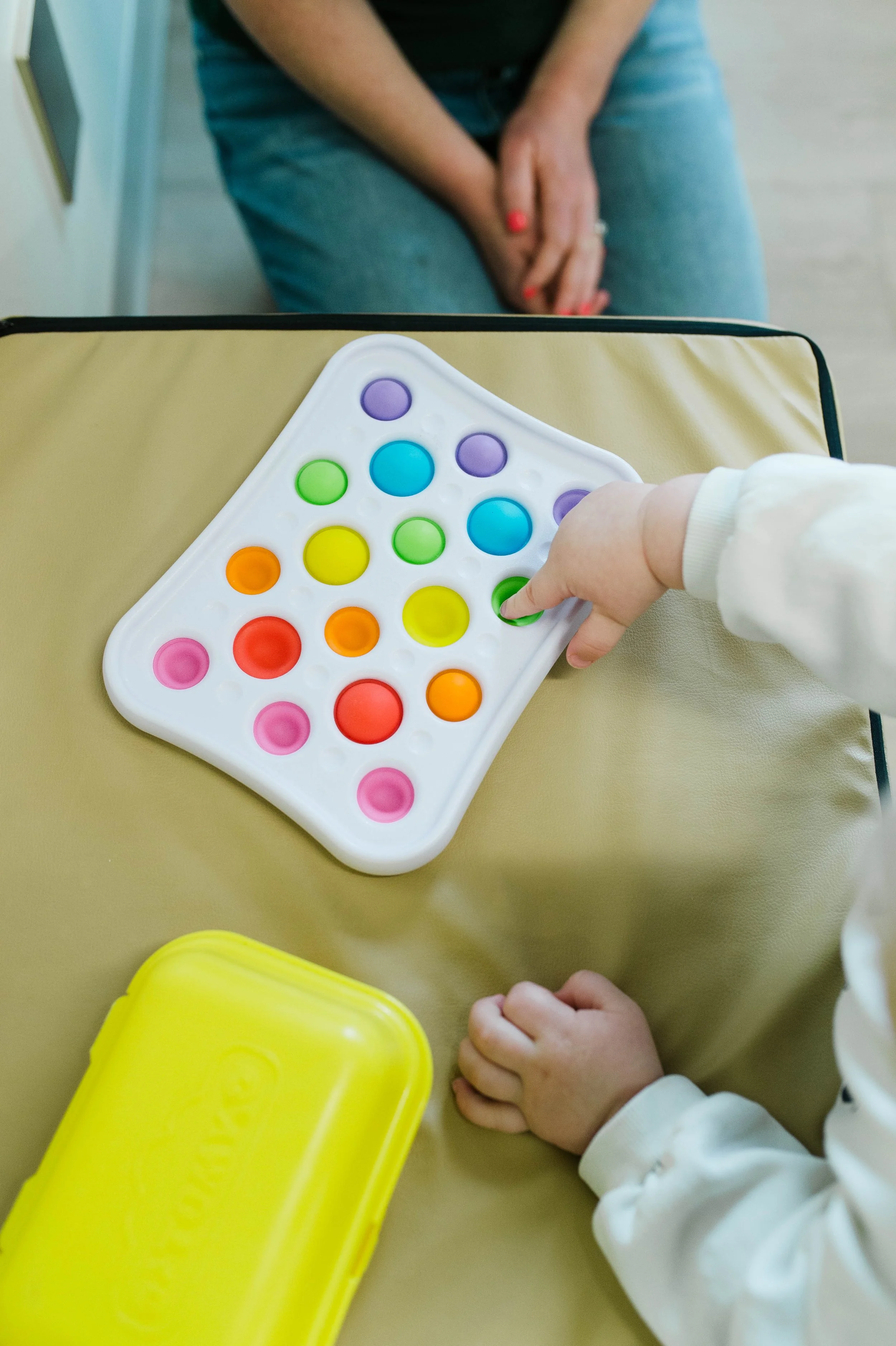
Once babies are on the move, sensory play gets messier and more intentional. Reaching into a bin of oats before seeing what's inside is an exercise in object permanence and sensory discrimination. The mess isn't a side effect. It's the whole point.
At this stage, motivated movement is the most efficient form of gross motor development. When a baby moves toward something they want, they're planning, executing, and problem-solving simultaneously. That crawl toward the shaker in the sensory bin? Science and physical therapy happening at the same time.
Parents are often surprised to learn that mouthing objects at this age isn't a bad habit. It's information gathering. The mouth has more sensory receptors than the hands at this stage. Allow safe mouthing. Redirect from unsafe objects. Trust the process.
12-24 Months: Sensory Input Becomes Self-Awareness
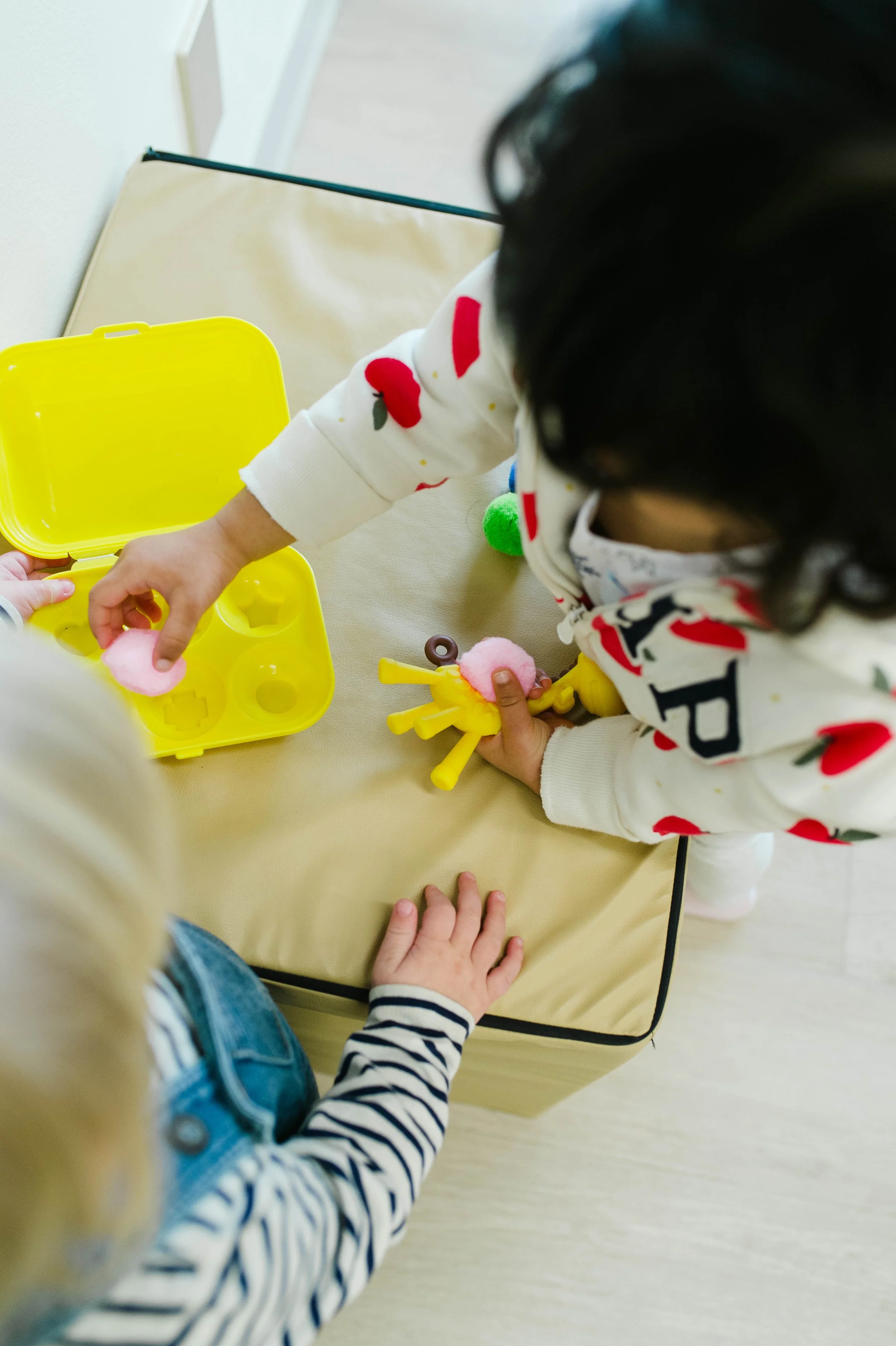
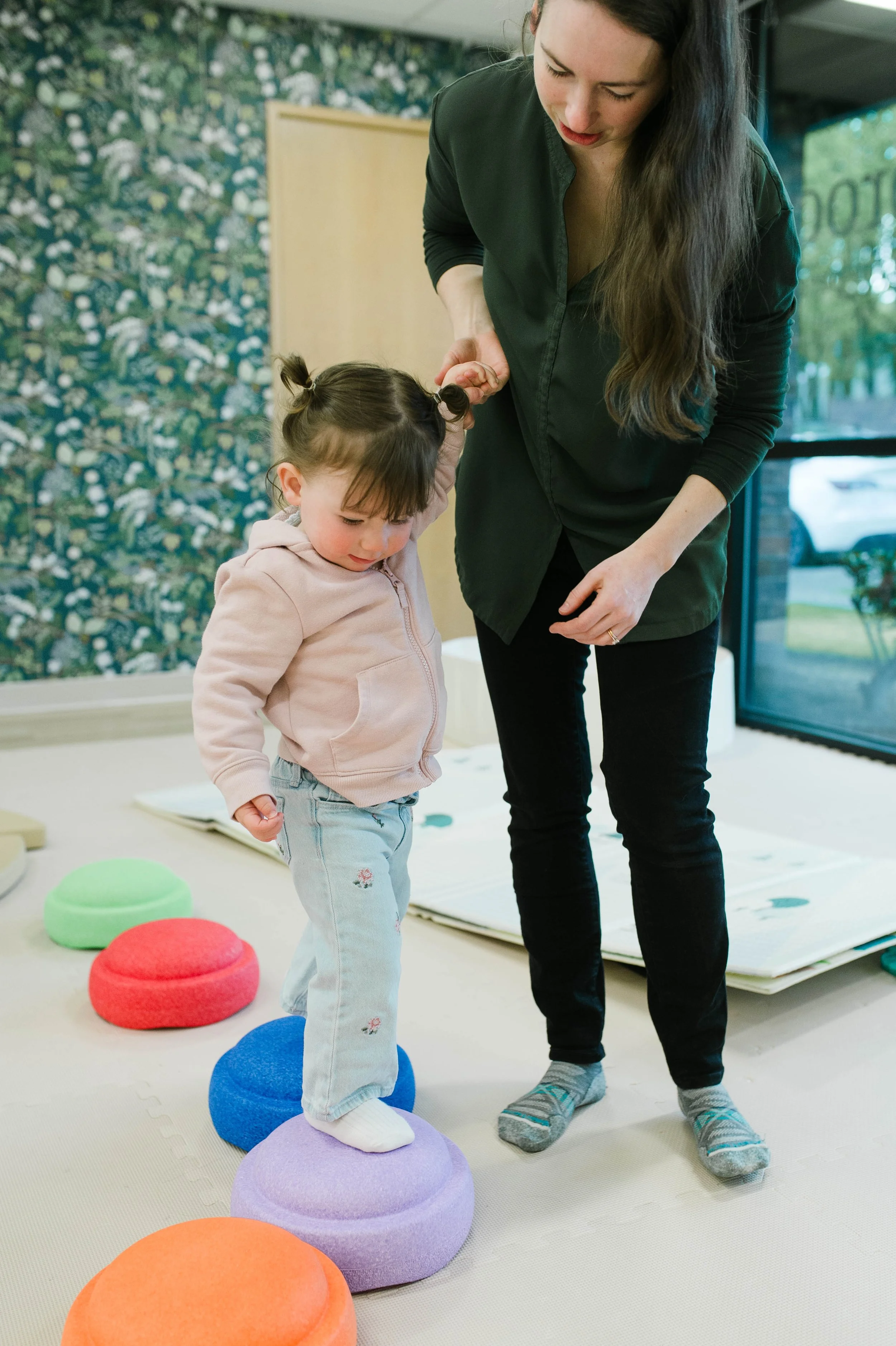
As babies become walkers, sensory development gets more sophisticated. Barefoot play on varied surfaces isn't just fun. It's activating a proprioceptive system that supports balance, coordination, and body awareness.
Toddlers who refuse a texture or pull back from sand aren't being difficult. Their sensory system is sending a clear signal and they're responding to it. The right move is to honor the no and invite them to watch someone else try it first.
This is also the stage where spatial language becomes powerful. Narrating your toddler's sensory experience with specific words like rough, smooth, cold, warm, bumpy, and slippery builds vocabulary in the richest possible context: physical experience.
What This Looks Like in a Class Setting
At The Heybrook's Purposeful Play classes, every weekly theme is built around exactly this kind of intentional sensory engagement. Facilitators don't just set up activities. They narrate what's happening developmentally, help parents see what their baby is communicating, and send families home with a clear picture of what to try during the rest of the week.
Classes are organized by developmental stage: Pre-Crawlers (0-7 months), Crawlers (7-12 months), and Walkers (12-24 months). Enrollment is rolling, so every week is a complete standalone experience. You can join any time.
The Simplest Thing You Can Do This Week
Get a washcloth slightly damp. Offer it warm, then cool, then dry. Watch your baby's face. Name what they're experiencing: warm, cool, wet, dry.
That's it. That's sensory development. No special equipment required.
If you want to go deeper, come to class. We'll show you exactly what to look for, what it means, and what to do with what you see.
Purposeful Play classes are enrolling now for May at our Seattle and Kirkland locations. Pre-Crawlers, Crawlers, and Walkers groups available. Rolling enrollment means you can start any week. JOIN US
Photography by Meredith McKee Photography - Maternity, Newborn + Family Photographer