
Why Animal Sounds Are Your Baby's First Language (And How to Use Them)
Of all the things a baby might say first, among the most common are moo, woof, and baa. Animal sounds are frequently among a baby's first intentional vocalizations, and there are good developmental reasons why.
When a parent makes an animal sound, their face goes wide, their voice changes, their energy spikes. The combination of facial expression, vocal change, and emotional intensity is exactly what makes an experience memorable and language-buildable. Animals are emotionally loaded in a way that most vocabulary words are not.
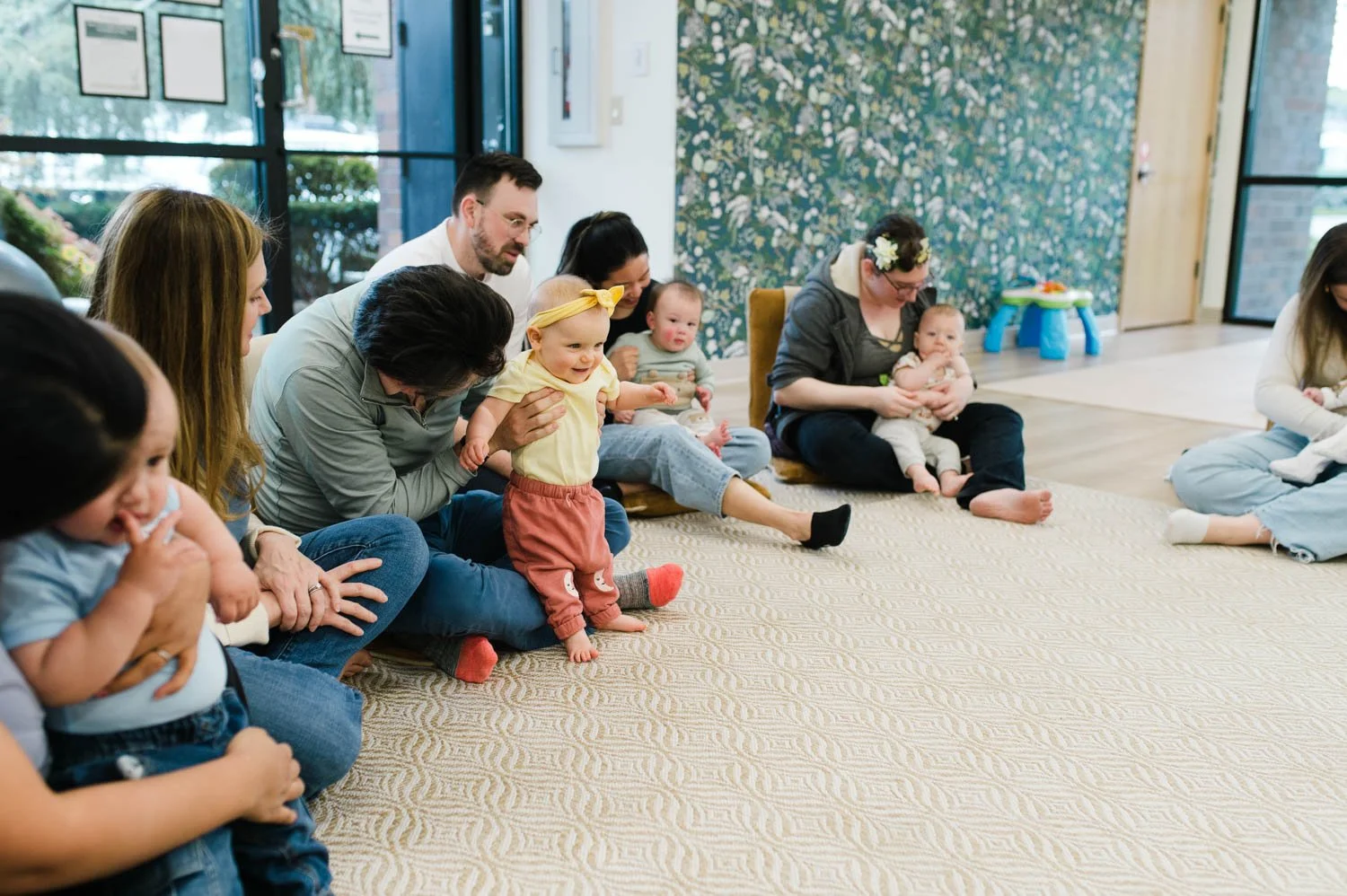
0-7 Months: Serve and Return with Sound
For Pre-Crawlers, animal sounds function as serve-and-return communication. Parent makes a moo with exaggerated expression. Baby responds with any vocalization, movement, or widened eye. Parent mirrors it back. Every volley is neural wiring for language and relationship happening simultaneously.
A baby who says baa when they see a sheep is demonstrating the same linguistic understanding as a baby who says more. They are using a sound to represent a concept. That is language. Celebrate every moo.
7-12 Months: The Referential Look
When a crawler looks at an animal in a book and then looks at the caregiver, that look is called referential gaze. The baby is asking: what is this? Responding to that look, naming the animal and making the sound, is one of the most powerful vocabulary-building interactions at this stage. Every referential look deserves a response.
Animal puppet play builds the same skill at a deeper level. The puppet is not a dog, but it represents one, and babies respond to it as if it is real. This representational thinking is the same cognitive mechanism that underlies language.
12-24 Months: Every Story Is a Sentence
For Walkers, animals become characters in stories. When a toddler puts the cow to sleep, tells the elephant it's hungry, or decides that the dog is afraid of the lion, they are constructing narrative: sequence, cause and effect, character, emotion. They are telling stories they don't yet have the words to speak.
Symbolic play, using objects to represent a scene and narrating what happens, develops language, narrative structure, sequencing, theory of mind, and creativity simultaneously. Every story they enact is a sentence being built.
What to Do Right Now
Open an animal book. Make the sound before you say the word. Big, dramatic, face-changing. Wait for any response. Then do it again!
In Purposeful Play Animals All Around week, this is what the entire session is built around. Come watch your baby make their first animal sound or your toddler tell an elephant a bedtime story. Both are language milestones!
Ready to join us? Find your spot here!