
My Toddler Ate Three Bites Yesterday and Air Today - Is That Normal?
Short answer?
Yes. Completely.
Longer answer?
If you’re parenting a toddler between 12–24 months, eating can suddenly feel like one of the most confusing parts of your day.
One meal they eat everything.
The next they reject all food except a single cracker they found under the couch.
And suddenly you’re asking:
Are they getting enough?
Is this picky eating already?
Am I creating bad habits?
Should I be doing something differently?
We hear these questions all the time in Parent Foundations - and here’s the reframe that tends to land hardest (in a good way):
👉 This isn’t a feeding problem. It’s toddler development.
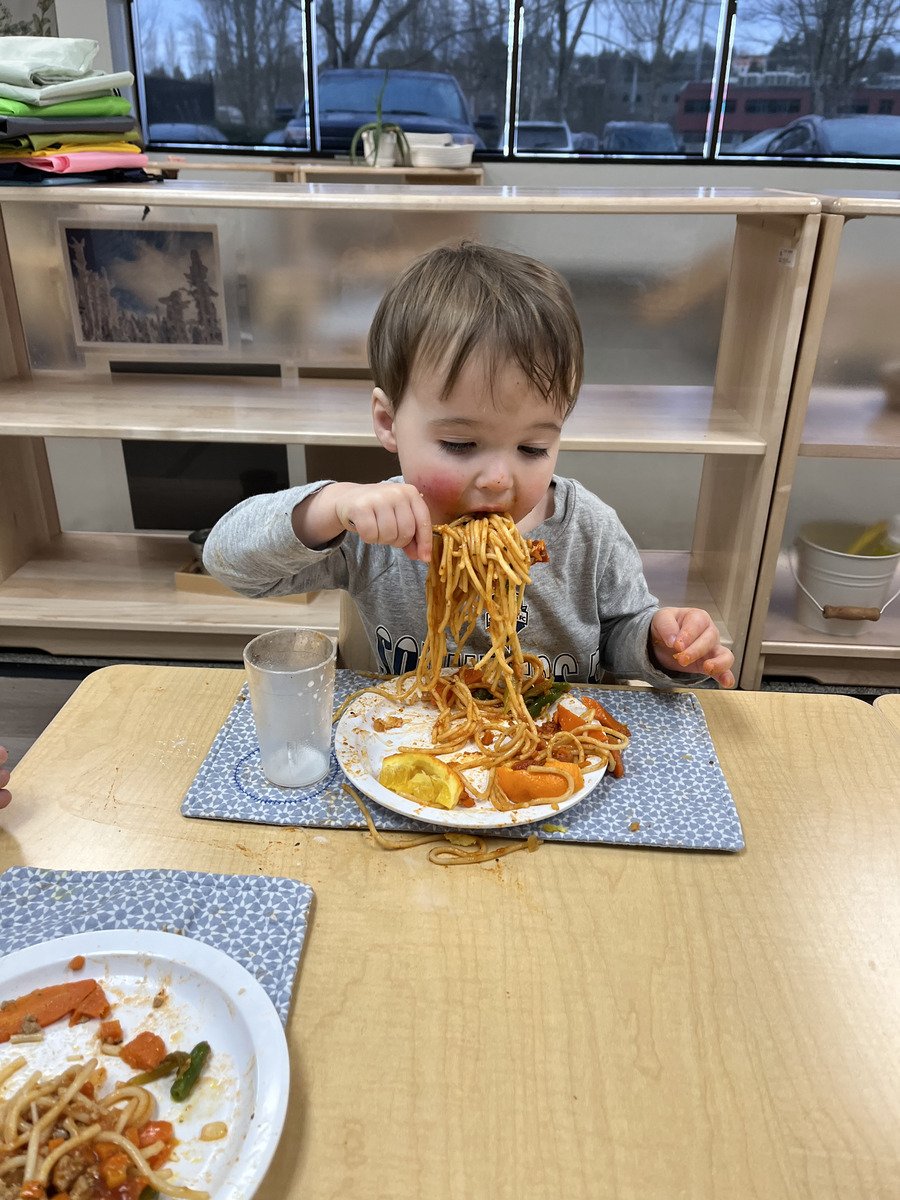
What’s Actually Going On With Toddler Eating
Between 13–24 months, eating often shifts from curiosity to control.
Your toddler is:
Practicing independence
Developing preferences
Testing boundaries
Learning new motor skills
Figuring out routines
All at once.
What looks like “picky eating” is often your child saying:
I can decide things now.
And food is one of the easiest places for them to practice that power.
This is why meals can suddenly feel:
Inconsistent
Messy
Emotional
Slower than they used to be
Not because you’re doing anything wrong — but because your toddler is doing exactly what they’re supposed to do.
How Much Should Toddlers Eat, Really?
This is where anxiety tends to spike.
Here’s what helps to know:
Appetite varies day to day and meal to meal
Growth slows compared to infancy, so hunger cues change
Intake balances out over time, not per plate
A helpful (very loose) guideline:
3 meals + 2 snacks per day
Roughly 1 tablespoon per food per year of age per meal
But here’s the most important part — and the one parents often miss:
Some meals will be big, some will be tiny, and some will be skipped. All of that can still add up to healthy growth.
When we zoom out instead of hyper-focusing on one meal, a lot of pressure starts to lift.
Picky Eating Isn’t Failure - It’s Communication
Toddlers refusing food doesn’t mean you failed.
It usually means they’re:
Full
Tired
Teething
Overstimulated
Unsure about a new texture
Or simply exercising choice
New foods often need many exposures before they’re accepted. And yes — sometimes that means a lot of “no thank you” first.
In Parent Foundations, we normalize this early because parents tend to carry so much quiet worry around meals.
You’re not alone in that.
What Actually Helps (and What Backfires)
What tends to help:
Offering variety without pressure
Pairing new foods with familiar favorites
Eating the same foods together
Keeping meals predictable
Praising effort, not intake
What often backfires:
Forcing or bribing bites
Negotiating every mouthful
Turning meals into power struggles
One of our favorite reframes:
👉 Connection matters more than control at the table.
Calm, neutral exposure builds trust — and trust supports eating far better than pressure ever will.
The Emotional Side Parents Don’t Talk About Enough
Feeding a toddler can bring up a lot:
Pride
Worry
Frustration
Self-doubt
You can feel confident one meal and completely overwhelmed the next.
That doesn’t mean you’re inconsistent.
It means you’re human.
This is why community matters so much during this stage.
When parents hear:
“Oh wow — us too.”
“That happens at our house every night.”
Something softens. The pressure eases. And meals start to feel less loaded.
Why We Talk About This in Parent Foundations
Parent Foundations isn’t about fixing your toddler.
It’s about understanding what’s normal, letting go of unrealistic expectations, and parenting alongside others who are right here with you.
This blog is just a small peek at the kinds of conversations we have — honest, supportive, and deeply reassuring.
If you read this and felt seen, relieved, or a little less alone…
👉 Learn more about Parent Foundations and join us
You don’t have to navigate toddlerhood solo.