
When to Worry About Your Baby’s Stiffness: Signs You Shouldn’t Ignore
By Dr. Mariah Wenglewski
As a pediatric chiropractor, one of the most common concerns I hear from parents is, “My baby feels so stiff. Is that normal?” It’s a very valid question. Babies are designed to move with ease and fluidity, but when their little bodies seem tense or rigid, it can be a sign that something deeper is going on. This is particularly involving the nervous system.

Understanding What “Stiffness” Means
A baby’s movements are guided by their developing nervous system, which controls muscle tone, posture, and coordination. When the nervous system is functioning well, babies can move freely, relax easily, and adapt comfortably to different positions.
However, if there’s tension or imbalance within the spine or surrounding tissues, it can disrupt how the nervous system communicates with the body. This can lead to increased muscle tone, which many parents describe as “stiffness.”
Signs Your Baby May Be Experiencing Stiffness
● Your baby often arches their back when being held or fed.
● Their arms or legs feel rigid or resist movement.
● They keep their fists tightly clenched most of the time.
● You notice limited head movement or a preference for turning one way. ● They seem uncomfortable during tummy time or resist lying on their stomach. ● There are feeding challenges, such as difficulty latching or staying latched.
While occasional tension can be normal, persistent stiffness should be evaluated, especially if it’s affecting feeding, sleep, or your baby’s comfort.
Possible Causes of Stiffness
There are many reasons a baby might develop stiffness. Some common contributing factors include:
● Birth stress or trauma, such as a long or fast labor, use of forceps/vacuum, or cesarean delivery.
● In-utero positioning, where space was limited, leading to asymmetrical pressure on the baby’s spine or muscles.
● Nervous system tension, where communication between the brain and body isn’t functioning as smoothly as it should.
These factors can cause subtle shifts or restrictions in the spine and surrounding tissues, which may influence how well the nervous system can regulate muscle tone and movement.

How Chiropractic Care Can Help
Gentle, specific pediatric chiropractic adjustments aim to restore normal movement and alignment within the spine, reducing stress on the nervous system. When the spine moves well, the nervous system can communicate more effectively with the body, this allows muscles to relax, reflexes to balance, and your baby to move and develop more naturally.
Parents often notice improvements such as:
● Easier feeding and latching
● Better sleep and relaxation
● Increased head and body movement
● A calmer, more comfortable baby
Pediatric chiropractic care is always gentle, precise, and tailored to your baby’s age and development. The goal isn’t just to reduce stiffness, it’s to support healthy nervous system function so your baby can grow and thrive in balance.
If you’ve noticed ongoing stiffness in your baby, it’s important to trust your instincts and seek guidance. Early evaluation and gentle chiropractic care can make a meaningful difference in how your baby moves, feels, and develops.
Your baby’s nervous system is the foundation of every milestone and supporting it early can help set the stage for lifelong health and ease. At Tree of Life Chiropractic, we specialize and focus on removing any interference in your baby’s nervous system that could be causing the stiffening, arching and tension you may be noticing.
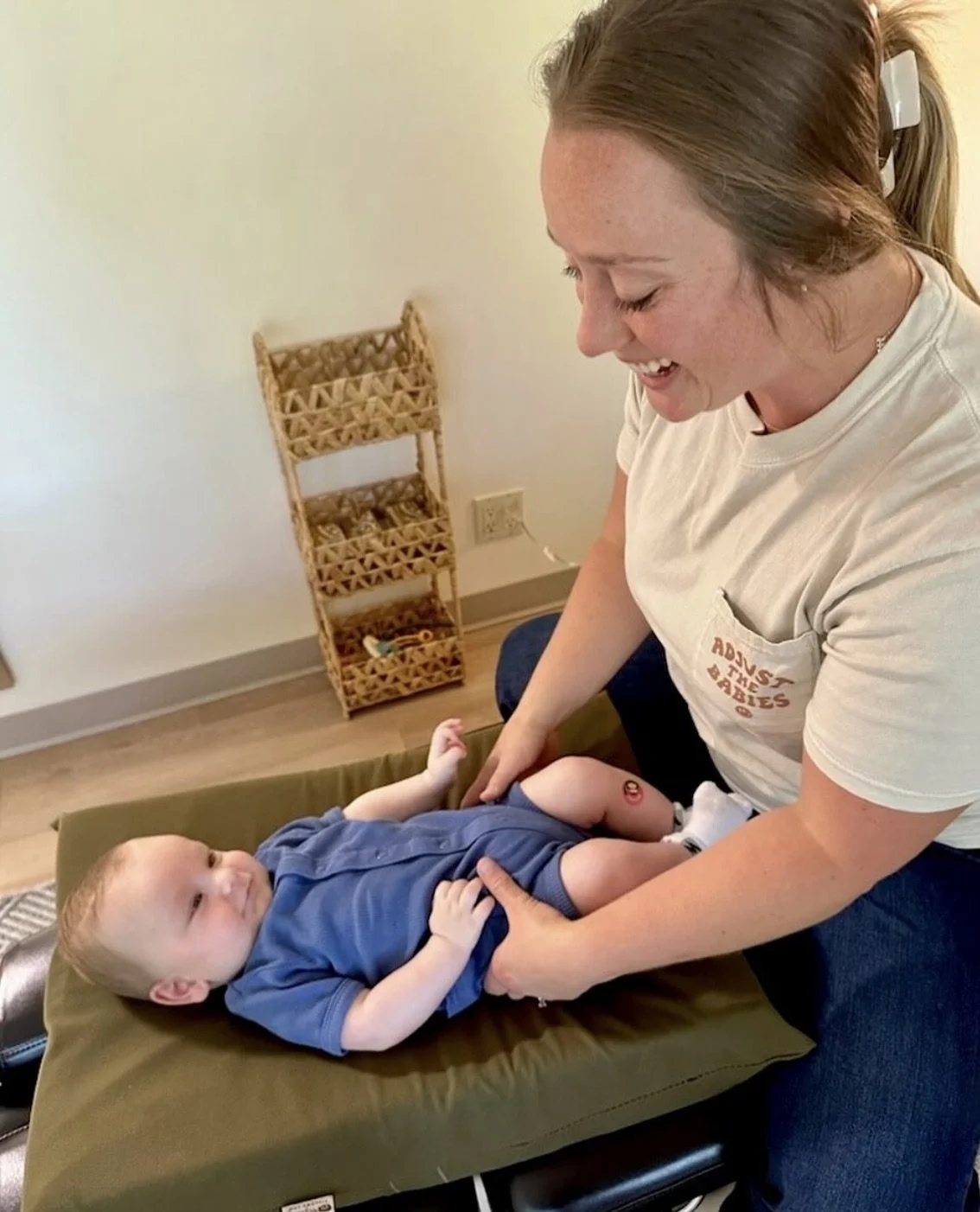
ABOUT THE AUTHOR:
Hi, I’m Dr. Mariah Wenglewski, a pediatric and perinatal chiropractor serving families in Kirkland and Seattle, Washington. I’m passionate about supporting moms through pregnancy, birth, and postpartum, and helping little ones grow and thrive. My approach is gentle, nervous system-focused, and rooted in connection—creating a safe space for healing at every stage of the journey into parenthood.
The Kirkland Tree of Life office is located inside the Heybrook! Come say hi!