
Why Your Baby Needs to Struggle (And What to Do Instead of Jumping In)
There is a moment in infant development so subtle and so significant that most parents miss it. A baby bats at a hanging toy. It moves. The baby pauses. Looks at the toy. Looks at their hands. Then does it again, on purpose.
That intentional repeat is the emergence of agency. The understanding that their actions cause effects in the world. It is one of the most important cognitive milestones of the first year. And it can only happen if the baby has the space to discover it.
The Five-Second Rule
The single most effective thing a caregiver can do to support a baby's developing sense of agency is also the hardest: wait. Not forever. Just five seconds. Count them in your head the next time your baby is working something out before you step in.
Those five seconds are not empty. They are full of planning, problem-solving, and the beginning of persistence. Every time we rescue too quickly, we interrupt that process.
0-7 Months: Cause and Effect
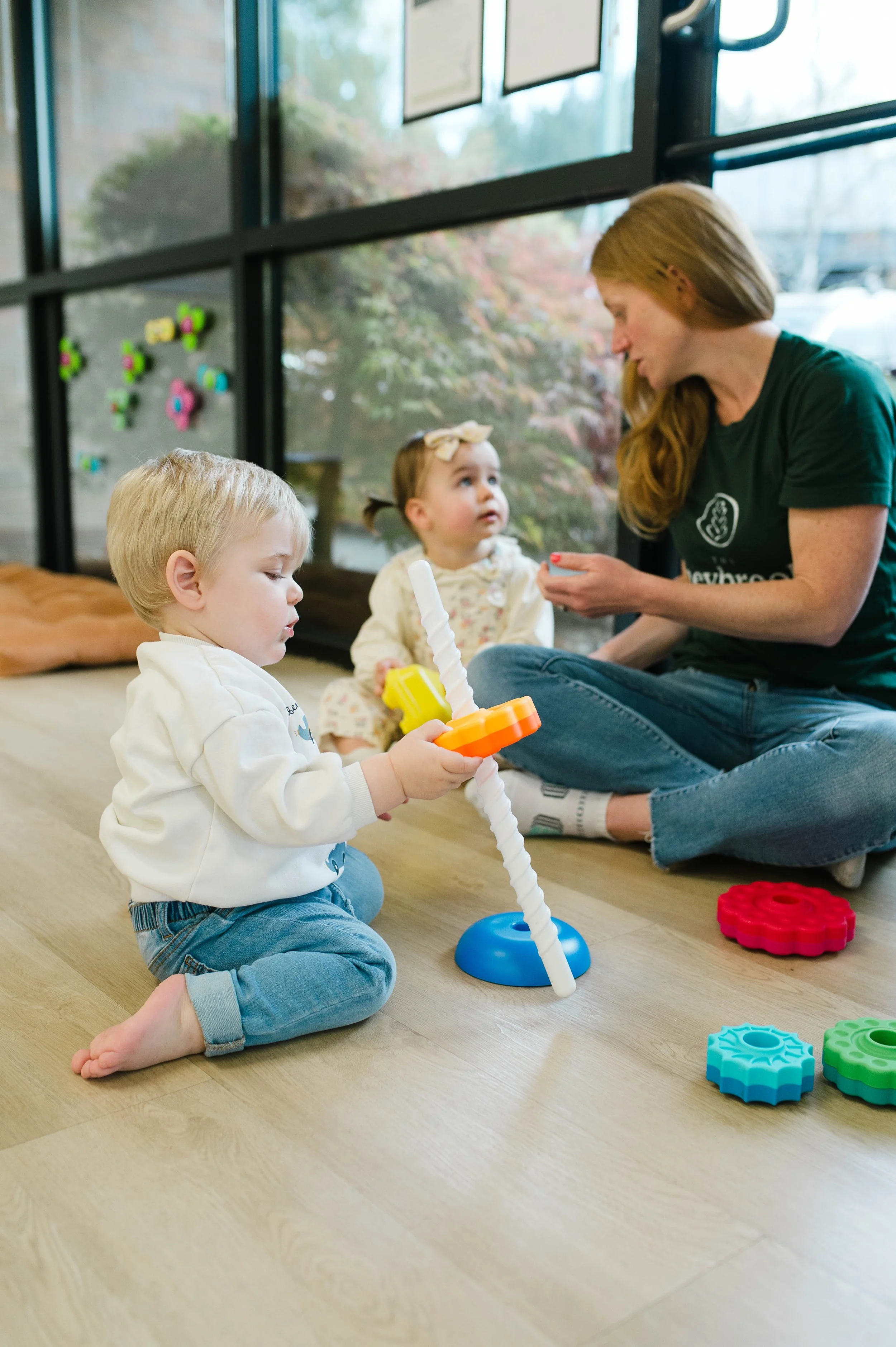
For Pre-Crawlers, productive struggle is about cause and effect. The baby who discovers that their arm movement makes a sound, and then repeats it intentionally, has just crossed a major cognitive threshold. This is intentionality in its earliest form, the same mechanism that drives curiosity and learning motivation. Give babies objects they can act on, step back, and watch what emerges.
7-12 Months: Your Face Is Their Permission Slip
Crawlers frequently look back at caregivers before attempting something new or risky. This is social referencing, a developmental milestone most parents have never heard of. They are reading your expression for information: is this safe to try? A calm, encouraging expression sends a clear signal. An anxious expression sends the opposite, even without a word.
12-24 Months: Me Do It Is a Developmental Announcement
When a toddler insists on doing something themselves, they are expressing one of the most important developmental drives of the toddler years: the need for autonomy.
When toddlers experience success after struggle, the brain releases dopamine, which reinforces persistence as a strategy. They learn, physically and neurologically, that hard things become possible if they keep trying. That is the foundation of resilience.
Let them try. Let them struggle. Let them feel the satisfaction of doing it themselves. Five seconds. Come see what happens.
Purposeful Play classes are enrolling now at our Seattle and Kirkland locations. Pre-Crawlers, Crawlers, and Walkers groups available. Rolling enrollment means you can start any week. JOIN US