
Why Singing to Your Baby Matters More Than You Think (At Every Age)
You do not need to be able to carry a tune. You do not need to know all the words. You need your voice and a baby in the room.
Singing to babies and toddlers is one of the most potent developmental tools in early childhood, and most families are already doing it without knowing what it's building.
Rhythm Is Pattern Recognition
Pattern recognition is the foundation of language, mathematics, and music. Babies who receive consistent rhythmic input show earlier language development and stronger phonological awareness, the ability to hear and manipulate the sounds inside words. Phonological awareness is one of the strongest predictors of reading success.
In other words, the same songs sung on repeat in the car are doing literacy work. The tedium parents feel is not felt by the baby. The baby is absorbing the pattern.
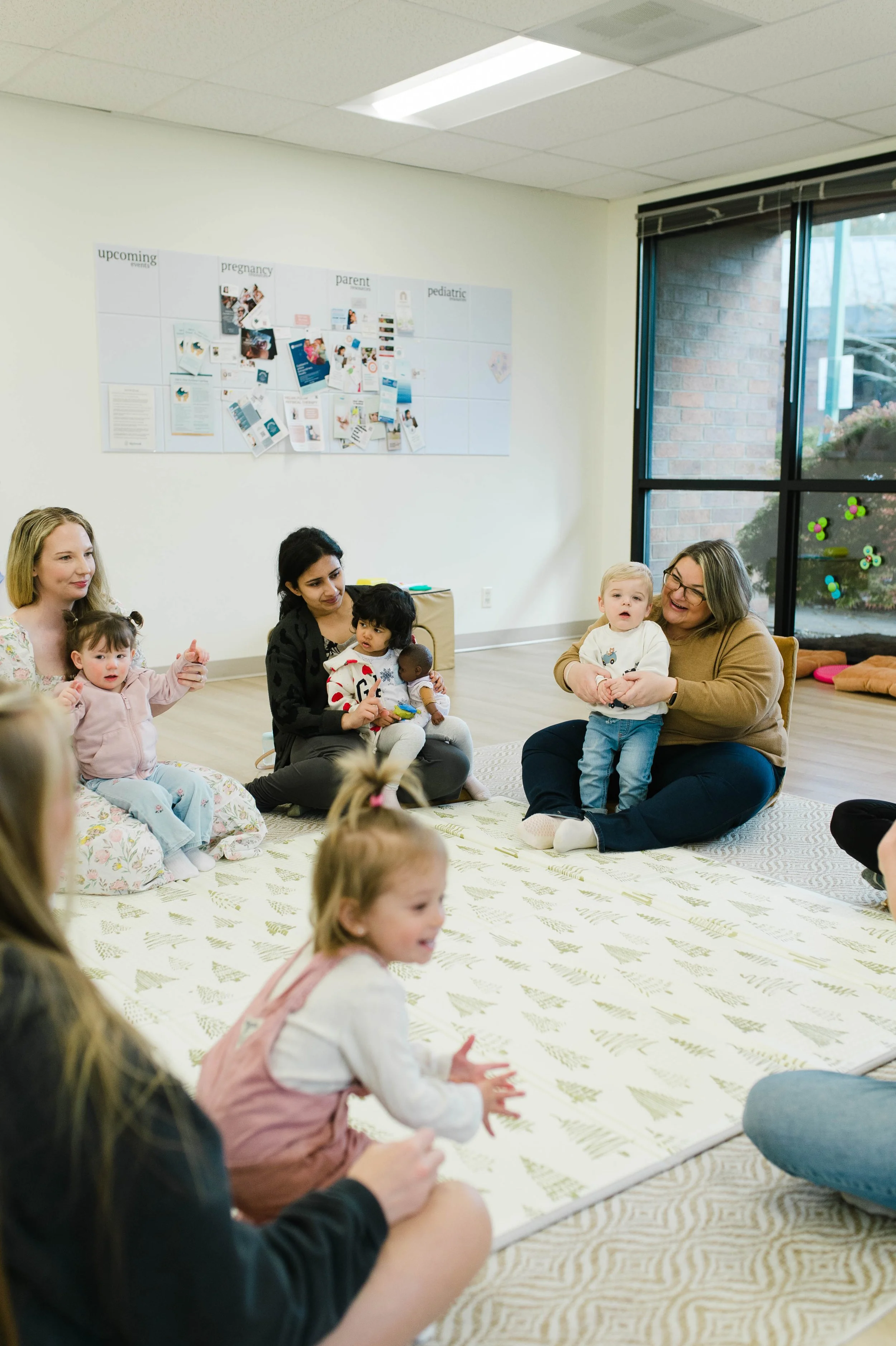
0-7 Months: You Are the Instrument
For Pre-Crawlers, the most powerful musical input is the parent's voice combined with facial expression and rhythm. The combination activates multiple sensory channels simultaneously and functions as one of the earliest forms of serve-and-return communication. Rhythm tapping, tapping a gentle beat on baby's back or arms while singing, adds a tactile layer that deepens the experience.
7-12 Months: The Discovery of Cause and Effect
When a Crawler shakes a rattle and hears the sound, something clicks. When they shake it again on purpose, they have discovered cause and effect through music. That intentional repetition is one of the first acts of agency, and the emotional charge of the discovery encodes it more deeply than almost any other type of learning.
Stop-and-go games like freeze dance develop auditory attention, inhibitory control, and signal-response relationships. All executive function. All wrapped in joy.
12-24 Months: Fill In the Blank
When a toddler fills in the last word of a familiar song before you say it, that is fill-in-the-blank completion, a recognized language milestone. They have memorized the pattern and can predict what comes next. Prediction is a core skill of reading fluency.
Marching to a beat synchronizes auditory and motor systems, the same neural integration that underlies reading fluency and mathematical rhythm. Group music play adds a social-emotional dimension: toddlers are regulating their bodies in relationship with other bodies.
The Simplest Thing
Sing the same songs every day. In the car, in the bath, during diaper changes. No musical skill required. If you want to see what intentional, age-matched music-based play looks like with expert facilitation, music week in Purposeful Play is the week to come.
Purposeful Play classes are enrolling now at our Seattle and Kirkland locations. Pre-Crawlers, Crawlers, and Walkers groups available. Rolling enrollment means you can start any week. JOIN US
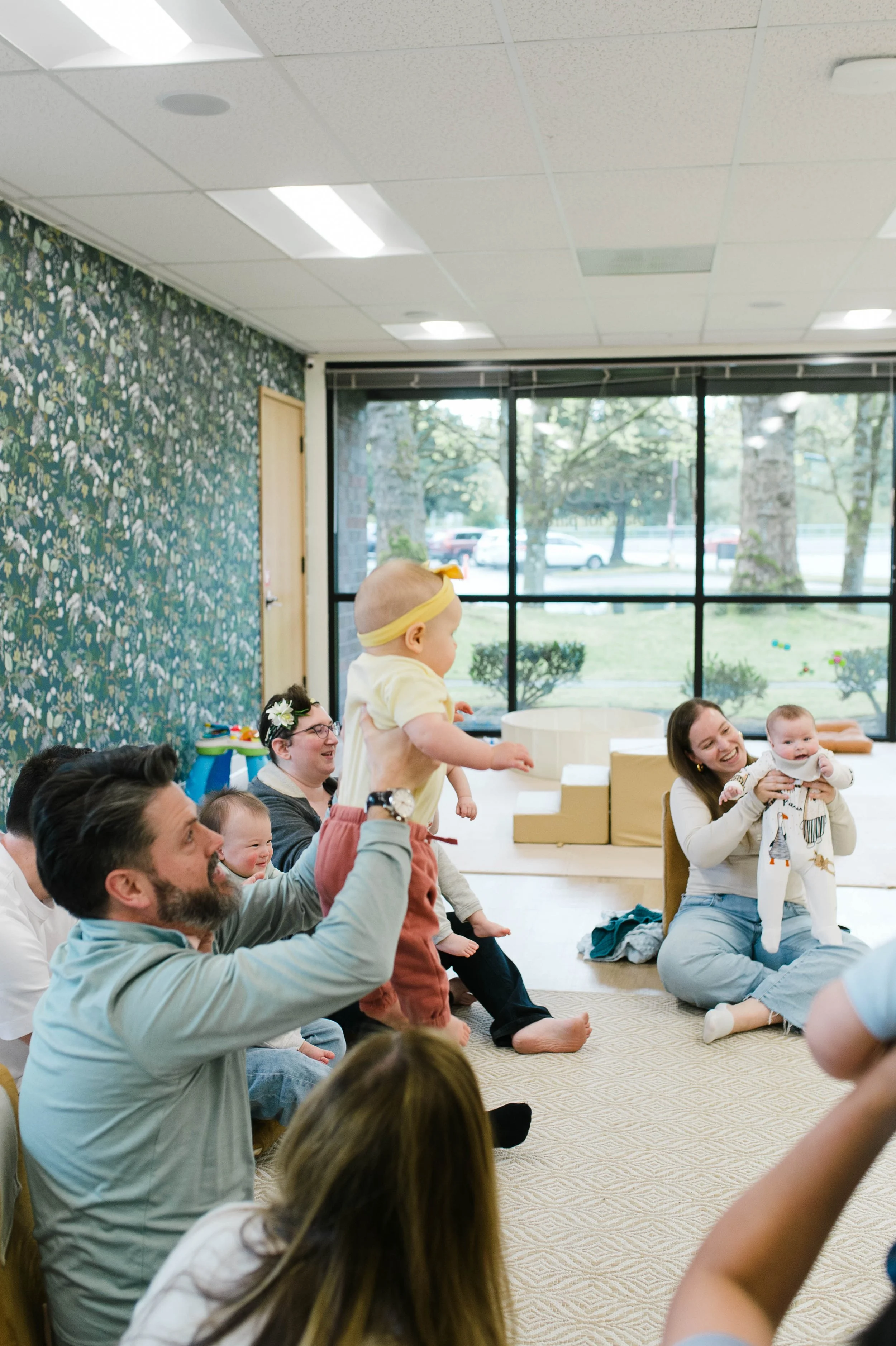
Photography by Meredith McKee Photography - Maternity, Newborn + Family Photographer