
Co-Regulation: Why Your Baby's Emotional Development Depends on Yours
If you have ever tried to calm a crying baby by telling them to calm down, you already know it doesn't work. Not because you said it wrong. Because their nervous system doesn't have that capacity yet.
Emotional regulation takes years to develop. Babies and toddlers are not capable of it on their own. What they can do is borrow it from you. That process is called co-regulation, and it's one of the most important concepts in early childhood development that most parents have never heard of.
What Co-Regulation Actually Means
Co-regulation is not a parenting technique. It's biology. When a baby is distressed, their nervous system activates a stress response. The fastest way to down-regulate that stress is physical proximity to a calm caregiver. Your regulated nervous system quite literally helps theirs settle.
This is why skin-to-skin contact calms a newborn faster than almost anything else. Why a parent's slow breathing can shift a baby's breathing. They are reading your nervous system and calibrating to it.
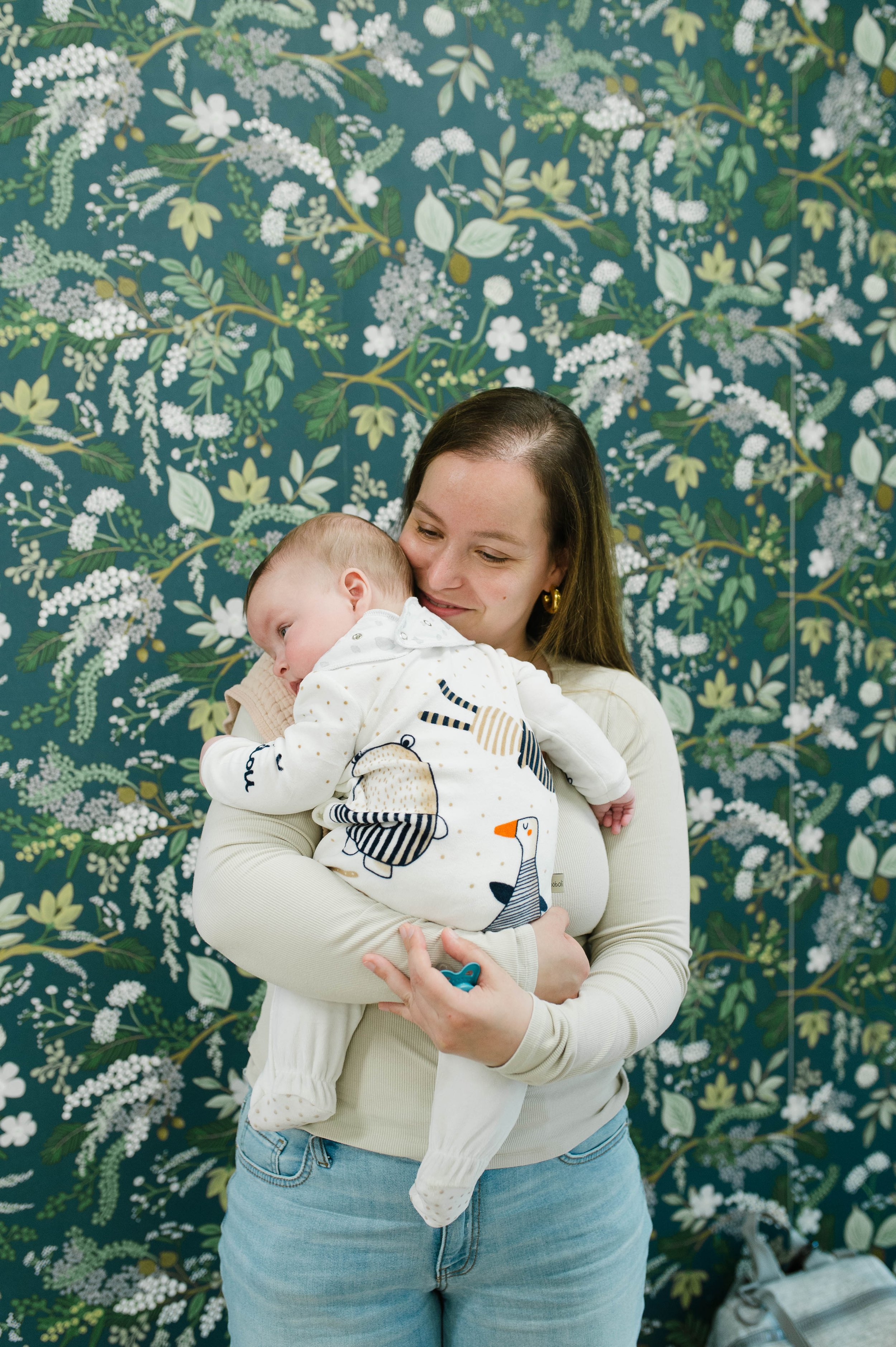
0-7 Months: Mirror and Match
In the first months, co-regulation happens through facial expression and responsiveness. When a baby shows distress and a caregiver mirrors and names it, the baby's nervous system registers that their internal state has been recognized. That recognition is profoundly calming at the neurological level.
When a baby looks away during face-to-face interaction, they are not rejecting you. They are self-regulating. The right move is to wait and follow their lead back in.
7-12 Months: Your Face Is Their Permission Slip
Before trying something new, crawlers will look back at a caregiver's face. This is called social referencing, a developmental milestone most parents have never heard of. They are reading your expression for information: is this safe?
A calm, encouraging expression sends a clear signal. An anxious expression sends the opposite, even without a word. Your face at this stage is your baby's permission slip for exploration.
12-24 Months: Name It to Tame It
When a toddler melts down, their brain is in a genuine stress response. Logic doesn't reach a stressed brain. What does reach it is your calm physical presence, getting on their level, breathing slowly, and naming what you see without trying to fix it.
"You're really upset right now. I'm right here." That sentence, delivered calmly, does more for a toddler in a meltdown than any consequence or redirection. You're not approving the behavior. You're regulating the nervous system so the behavior can actually change.
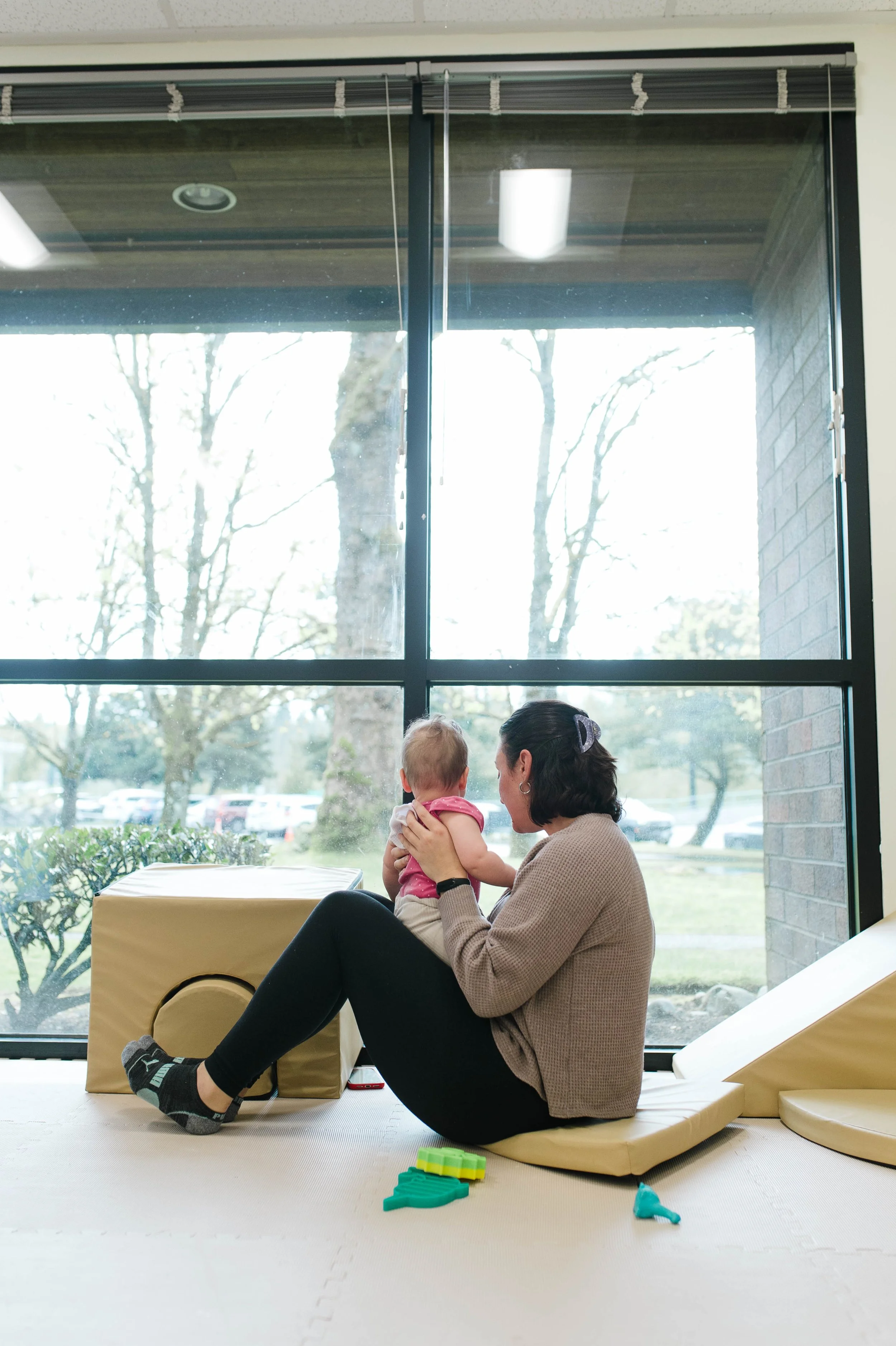
What This Looks Like in Class
Every week in Purposeful Play, facilitators coach parents through co-regulation in real time. When a baby gets overwhelmed, parents learn to slow down and read the cues. When a toddler has a hard moment, parents practice naming the feeling rather than managing the behavior.
The next time your baby or toddler is upset: slow your own breathing before you do anything else. Get close. Don't speak for a moment. Just breathe slowly near them. You're not doing nothing. You're doing the whole thing.
Purposeful Play classes are enrolling now at our Seattle and Kirkland locations. Pre-Crawlers, Crawlers, and Walkers groups available. Rolling enrollment means you can start any week. JOIN US