Floor Time for Babies: Why It Matters More Than You Think
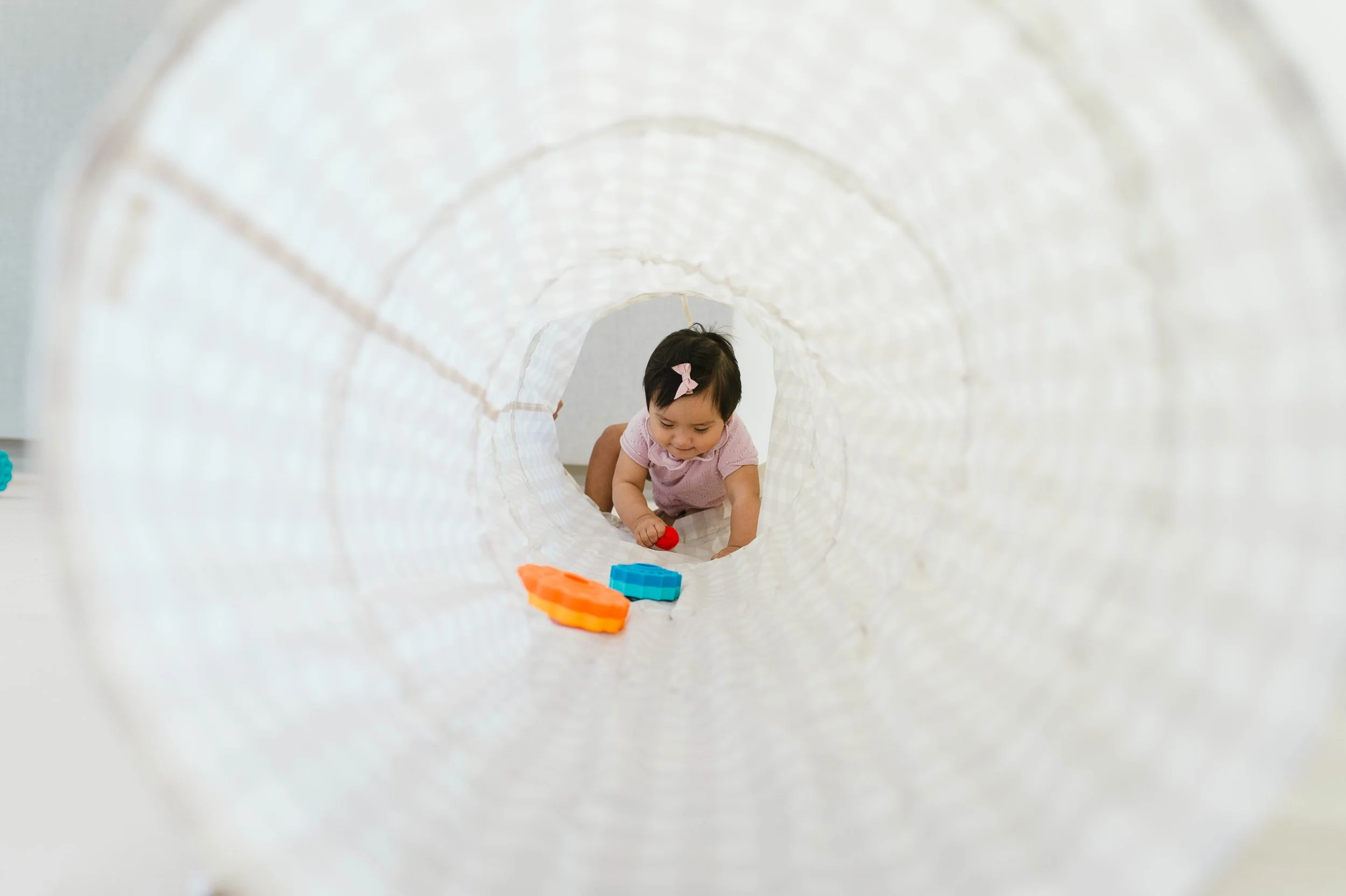
There is a moment in every Crawlers class when a baby stops at the entrance of the tunnel. They look at it. They look at their parent. They look back at the tunnel. And then they plan.
That pause is motor planning in action. The cognitive process of assessing a physical challenge and deciding how to execute. It is some of the most important brain work a baby does all day. And it requires exactly one thing: the opportunity to do it.
Why Floor Time Is the Foundation
The floor is a baby's classroom. Rolling requires the brain to coordinate head righting, spinal rotation, and weight shifting simultaneously. It's one of the first movements that crosses the body's midline, and midline crossing is essential for the hemispheric integration that reading and writing require. Tummy time builds the shoulder girdle strength that will eventually hold a pencil. Crawling coordinates both hemispheres of the brain in ways that carry forward for years.
0-7 Months: Give Them the Floor Early
For Pre-Crawlers, the goal is simple: as much firm-surface floor time as the baby will tolerate. Start short and increase gradually. Use visual motivation. A parent's face at floor level will extend tummy time longer than almost anything else.
When a baby rolls for the first time, celebrate it as the major neurological event it is. They just coordinated their entire body across the midline.
7-12 Months: Motivated Movement
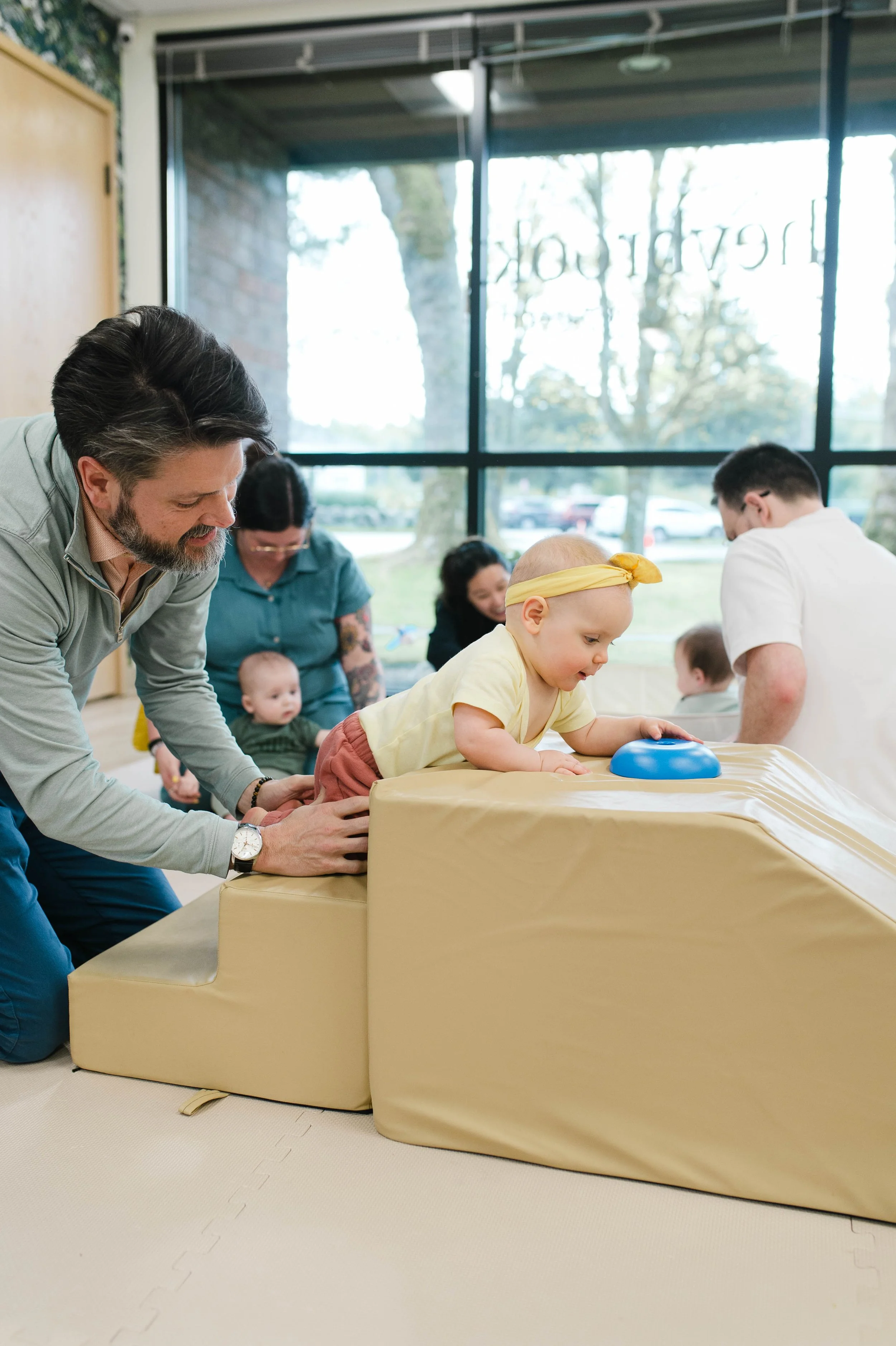
For Crawlers, the most effective gross motor support is motivated movement. Place something they want just out of reach and wait. The desire to reach it activates motor planning in a way no exercise can replicate.
Obstacle courses at this stage build spatial awareness and proprioceptive pathways that underlie coordination. The pause before a baby moves forward is executive function in action. Resist the urge to push. Let them work it out.
12-24 Months: Let Them Climb
The toddler climbing urge is not defiance. It's a developmental drive. Toddlers are compelled to climb because climbing builds core strength, proprioceptive awareness, and risk assessment simultaneously. The answer to unsafe climbing is safe climbing. Give toddlers a place where climbing is allowed and supervised.
Try This at Home This Week
Place your baby on a firm surface with something interesting just out of reach. Then wait. Watch their face before they move. That's the planning. That's everything.
Purposeful Play classes are enrolling now at our Seattle and Kirkland locations. Pre-Crawlers, Crawlers, and Walkers groups available. Rolling enrollment means you can start any week. JOIN US